 University of California, San Francisco |
NCCC EHE Newsletter – May 27, 2026 (v2-today)


Welcome to the spring edition of the quarterly NCCC Ending the HIV Epidemic (EHE) Newsletter! See resources for healthcare providers, including support for addressing viral hepatitis, updated federal guidelines on managing HIV in pregnancy, and more:
Building Confidence in Hepatitis Care
Tailored Viral Hepatitis Guidance
Hepatitis Awareness Month is a great opportunity to remind healthcare professionals that NCCC’s hepatitis C (HCV) service offers case-based education for providers with questions about HCV screening, staging, treatment, monitoring, and linkage to care. Our team assists clinicians of all experience levels—including physicians, advanced practice providers, pharmacists, case managers, and social workers—with both routine and complex clinical scenarios.
We provide guidance on all aspects of HCV management, such as:
- Staging and monitoring
- Regimen selection and dosing
- Drug-drug interactions
- Screening and testing
- Special scenarios like prior treatment failures, cirrhosis, renal disease, pregnancy, substance use disorders, and care for patients in underserved or resource-limited settings.
Thanks to the exciting development of direct-acting antivirals (DAAs), HCV treatment has been transformed: with these medications, infection can be cured in just 8-12 weeks for most people. Our team is ready to guide providers in accessing and administering these treatments – and in doing so, help improve patient quality of life.
Thanks to the exciting development of direct-acting antivirals (DAAs), HCV treatment has been transformed: with these medications, infection can be cured in just 8-12 weeks for most people. Our team is ready to guide providers in accessing and administering these treatments – and in doing so, help improve patient quality of life.
HCV Support
Hepatitis Post-Exposure Management, 7 Days a Week
Along with our HCV management service, the National Post-Exposure Prophylaxis Warmline (PEPline) is available to provide timely guidance for clinicians managing occupational and non-occupational bloodborne pathogen (BBP) exposures.
This year, PEPline hours expanded to include weekends, making daily service available for providers with questions about post-exposure prophylaxis (PEP) for hepatitis B and C, and HIV.
- PEPline Weekday Service: Monday – Friday, 7 a.m. to 5 p.m. PT
- PEPline Weekend Hours: Saturday and Sunday, 10 a.m. – 2 p.m. PT
- Holidays: Closed
All U.S.-based healthcare professionals are encouraged to call us during these hours for tailored guidance grounded in established PEP clinical guidelines.
PEP Support
Perinatal HIV Guideline Updates
Important Changes to HHS Guidelines
On March 31, the U.S. Department of Health and Human Services (HHS) Panel on Treatment of HIV During Pregnancy and Prevention of Perinatal Transmission updated its guidelines to reflect the latest available data.
Key changes to practice recommendations include:
- A new preferred antiretroviral regimen in pregnancy
- Expanded HIV PrEP options, including long-acting injectable PrEP
- Updated neonatal safety monitoring
NCCC’s 24/7 Perinatal HIV Hotline
If you have questions about applying the updated guidelines in practice, the Perinatal HIV Hotline is here for round-the-clock support. As the only national resource of its kind for healthcare professionals, the hotline supports clinicians caring for parents and infants affected by HIV, from preconception through pregnancy and postpartum. Our HIV specialists are available to walk you through the latest updates and provide on-demand clinical education on perinatal HIV care, including:
- Preconception counseling and care for women with HIV
- Navigating complex or unique HIV treatment scenarios
- Managing late presentation of HIV during pregnancy and postpartum
- Supporting shared decision-making between parents and providers, including breastfeeding discussions
The hotline is available 24/7/365 to offer individualized advice across all aspects of perinatal HIV management, so healthcare providers can feel supported and confident in delivering high-quality, evidence-informed care.
Perinatal Hotline
CDC Publishes Latest National HIV Data

Last week, the U.S. Centers for Disease Control and Prevention (CDC) published new national data showing slight improvements in HIV care and treatment outcomes in the United States, while highlighting the continued need for expanded testing, prevention, and treatment efforts.
See Data
Mentorship that Strengthens HIV Care
Are you training at the postgraduate level and interested in learning more about these areas of care? Our Minority AIDS Initiative (MAI) Preceptorship program is accepting new learners starting in August 2026.
The NCCC MAI Preceptorship provides clinicians-in-training the opportunity to work directly with our experienced clinical education specialists through a virtual learning experience that includes participation in calls and case-based teaching. This program is designed to support eligible healthcare providers who are representative of and/or serving populations disproportionately impacted by HIV.
“This was an incredible high yield learning experience. All of the clinicians I worked with were very friendly and incredibly knowledgeable in their respective fields. It was helpful to be able to listen in on a variety of calls in a short amount of time and see a lot of cases that I myself would have called the NCCC for advice on. I definitely learned a lot from listening in on calls and debriefing with the clinicians. I greatly appreciated this opportunity.”
– Post-Program Feedback from MAI Preceptor
The preceptorship is available free of charge to eligible learners and offered throughout the year.
MAI Preceptorship
Watch: Syndemic Care for SUD
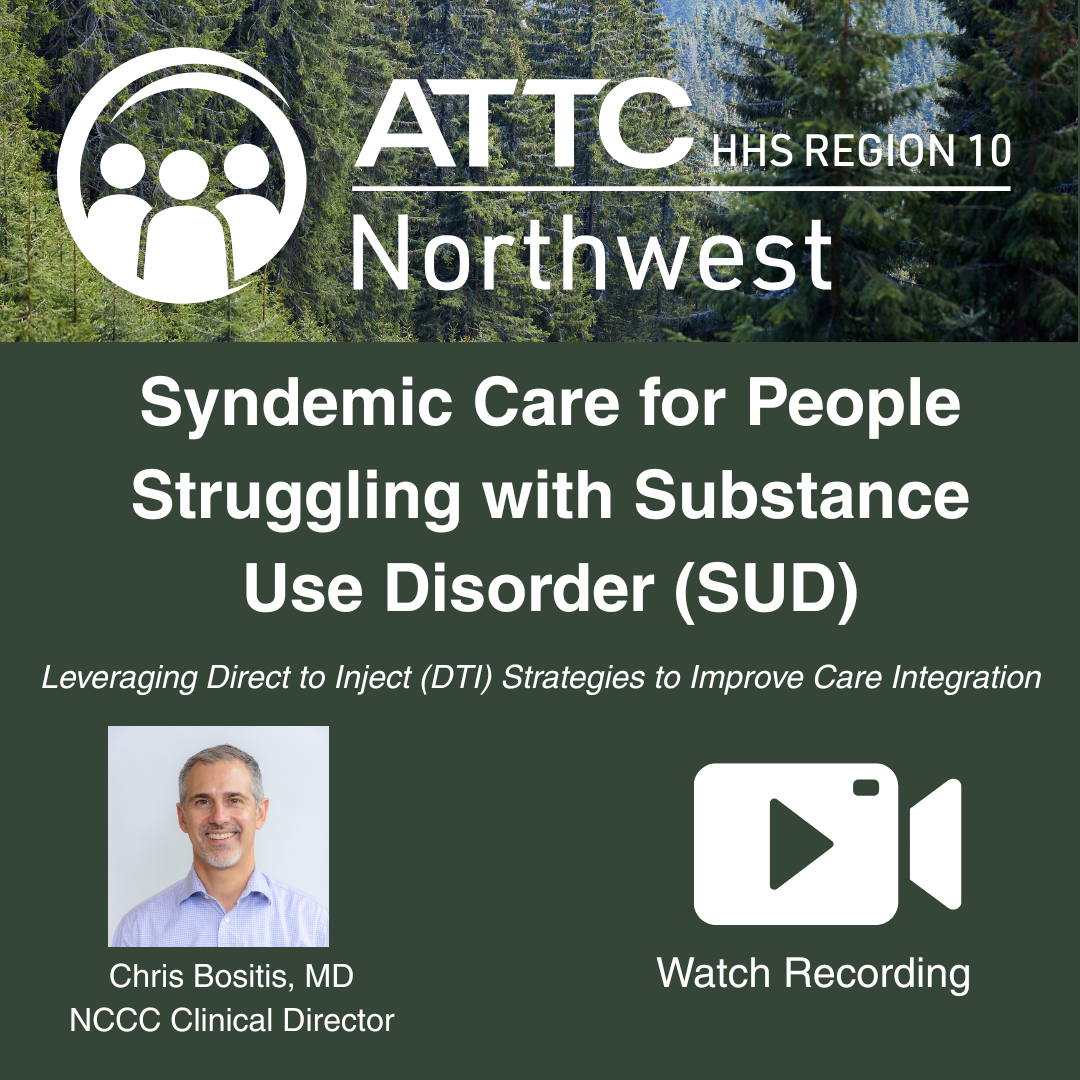
NCCC Clinical Director, Chris Bositis, MD, recently joined our partners at the Northwest Addiction Technology Transfer Center (ATTC) to discuss innovative approaches to substance use and HIV care:
“Syndemic Care for People Struggling with Substance Use Disorder (SUD) – Leveraging Direct to Inject (DTI) Strategies to Improve Care Integration.”
Watch Recording
Listen: Not Otherwise Specified NEJM Podcast
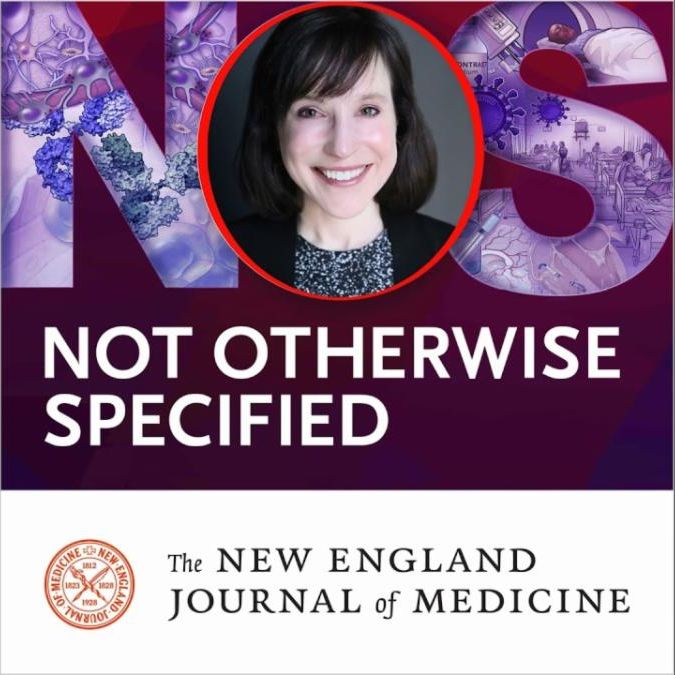
In a recent episode of the New England Journal of Medicine (NEJM) Not Otherwise Specified podcast, Dr. Jonathan Han offered a moving tribute to late NCCC founder, Dr. Ron Goldschmidt, and the origins of our program. Reflecting on the early days of the HIV/AIDS epidemic at San Francisco General Hospital, Dr. Han recalls Ron’s belief that family medicine practitioners didn’t need to “take the lead” in HIV care, but that they needed to make a difference.
From that vision came our National HIV Warmline, a service rooted in compassion, connection, and a commitment to empowering clinicians nationwide. More than three decades later, Ron’s legacy continues through NCCC’s ongoing work to expand access, improve health outcomes, and support providers on the front lines of care.
Listen
Support NCCC

NCCC Founder Dr. Ron Goldschmidt (1943-2024)
If you value access to free, evidence-informed clinical support for healthcare providers nationwide, consider making a donation to help sustain and strengthen this work.
Donate
NCCC Partner Spotlight

The HIV Resource Hub (formerly TargetHIV) bridge website is now available!
Funded through the Health Resources and Services Administration’s (HRSA) HIV/AIDS Bureau (HAB), this interim website provides access to mission-critical resources, including key Ryan White HIV/AIDS Program (RWHAP) and Ending the HIV Epidemic in the U.S. (EHE) initiative information, technical assistance, funding opportunity documents, and programmatic updates and announcements.
The full HIV Resource Hub is expected to launch later this summer, building on the bridge website with expanded features and additional content.
HIV Resource Hub
Connecting with Clinicians Nationwide
Spreading The Word at ACTHIV
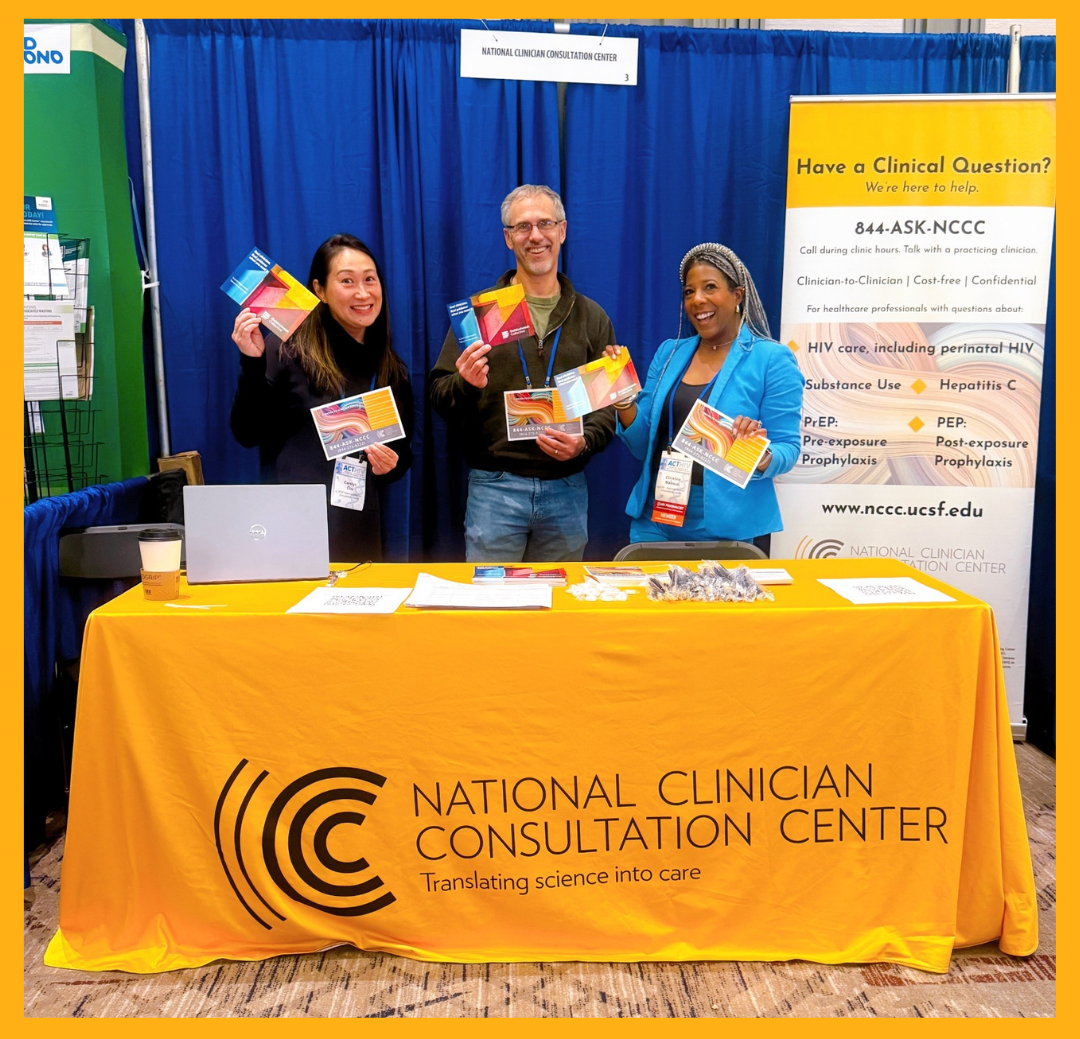
The NCCC team was grateful to join colleagues from across the country this month at the American Conference for the Treatment of HIV (ACTHIV) 2026 in Atlanta. Events like ACTHIV bring together clinicians, public health professionals, and advocates who are united in a shared mission: improving care, access, and outcomes for people impacted by HIV.
We had the opportunity to connect with clinicians who are paving the way in HIV prevention and treatment, share resources, and learn more about the innovative work happening in communities nationwide. These conversations continue to reinforce the importance of collaboration and the value of accessible, clinician-to-clinician support.
Next Up: National Ryan White Conference
We look forward to continuing these connections at the National Ryan White Conference on HIV Care & Treatment in August! If you’ll be attending, we hope you stop by our exhibiting booth to meet us and learn more about our services.
Order 844-ASK-NCCC Palm Cards
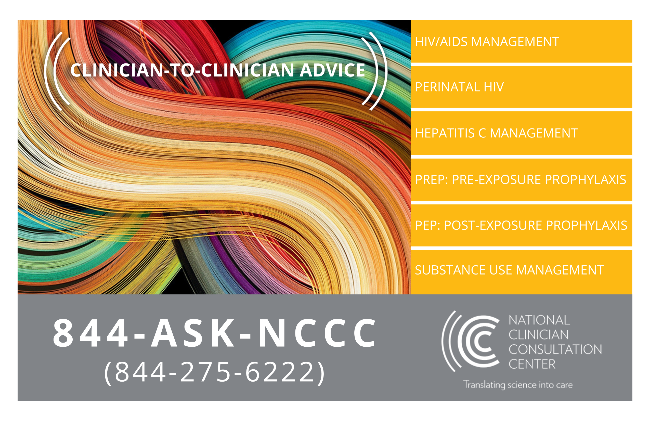
Please help us spread the word about our program, including our new 844-ASK-NCCC (275-6222) phone number. We’re happy to provide both physical and digital materials to help promote our free services, including mailing new promotional palm cards for distribution.
If your organization lists NCCC as a resource in your materials, clinical practice protocols, electronic health system, or on your website, please ensure our information is updated to include 844-ASK-NCCC for all services.
Please contact sean.brennan@ucsf.edu for more information.
Quarterly Question
In our last edition, we asked readers which syndemic condition they see most often in their practice: HIV, viral hepatitis, substance use disorders (SUD), or other co-occurring conditions.
While the voting was close, we were interested to learn that most providers (29%) encountered SUDs most frequently among their patients.
Navigating SUD can be one of the more challenging aspects of providing clinical care, which is why NCCC introduced our substance use consultation service in 2016. Over the past decade, our multi-disciplinary team of addiction medicine-certified physicians and clinical pharmacists has provided nearly 7,000 individualized consultations to healthcare professionals on the treatment/management of opioid, alcohol, and other SUDs.
To better understand the barriers clinicians face when accessing SUD specialists, we recently added a new screening question for first-time callers. We appreciate hearing from you, our readers, as well:
What is the biggest challenge accessing a SUD specialist in your practice?
- Long wait times to connect with a specialist
- Insurance coverage/authorization barriers for referral
- Unclear referral pathways or processes
- No local/regional specialists available
- I don’t have any access issues
The National Clinician Consultation Center is part of the AIDS Education and Training Center (AETC) Program and is located at the University of California, San Francisco (UCSF) / San Francisco General Hospital. It is supported by the Health Resources and Services Administration (HRSA) of the U.S. Department of Health and Human Services (HHS) as part of an award totaling $2,527,777 with 0% financed with non-governmental sources.